There is a particular sound that lives in the memory of many Hyderabadi households — the soft, musical jhankaar of kangans meeting at the wrist as a bride walks in, as a mother ties her daughter’s rakhi, as a grandmother reaches for her cup of Irani chai. That sound carries something beyond jewellery — it carries memory, occasion, and belonging.
If you’ve ever wondered, “What exactly is a Hyderabadi kangan, and why does it feel so different from an ordinary bangle?“ — here’s an honest answer, rooted in real history and real craft.
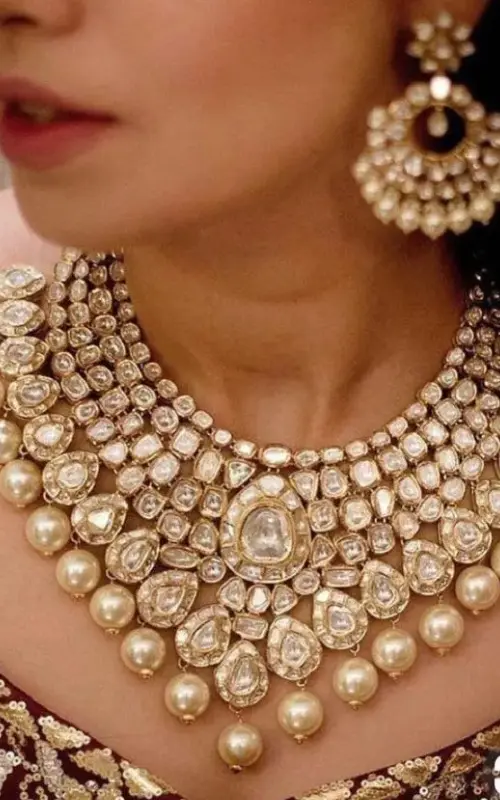
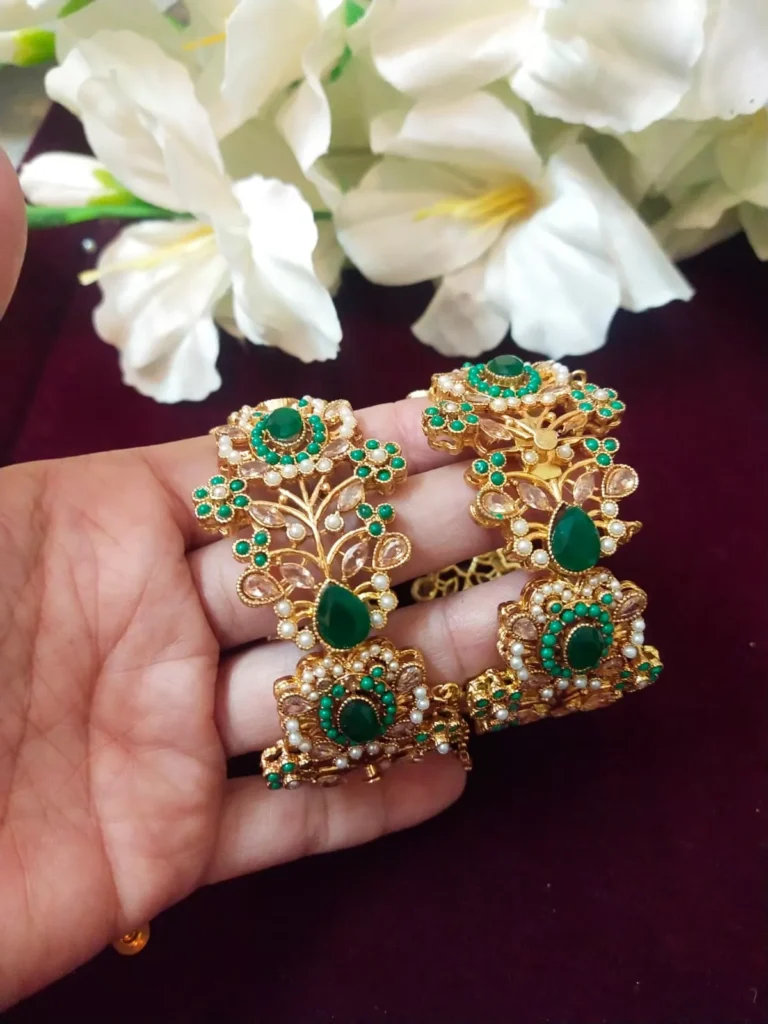
A Hyderabadi kangan is a traditional, often thick or kada-style bangle associated with the jewellery aesthetic of Hyderabad and the broader Deccan region. It’s commonly recognised for kundan and polki-style stonework, meenakari (enamel) detailing, and pearl (moti) embellishment — elements that Hyderabad’s jewellery markets, particularly around the historic Laad Bazaar, have long been known for. Unlike simple everyday bangles, a Hyderabadi kangan tends to be bold and ornamental, often worn on special occasions and as part of bridal jewellery sets.
To understand the Hyderabadi kangan, it helps to understand Hyderabad’s broader jewellery legacy. The city, shaped historically by the Qutb Shahi and later Nizam rulers, became a well-known centre for jewellery trade and craftsmanship — most famously around Laad Bazaar, near the Charminar, which has been a hub for bangles and bridal jewellery for generations.
Kundan and polki work — techniques involving glass-set gold and uncut, flat-cut diamonds respectively — are part of a broader jewellery tradition found across North and Central India, particularly linked historically to Rajasthan and Mughal-era courts. Hyderabad developed its own strong identity within this shared tradition, especially known for its use of pearls (the city has long been associated with the pearl trade) alongside kundan and meenakari work.
It’s important to be transparent here: while kangans and bangles hold general symbolic importance in Indian wedding traditions across many regions — often associated with marital status, blessings, and ceremony — there isn’t a single, uniquely documented “Hyderabadi ritual” tied only to kangans. What is true is that gifting bangles and jewellery, including kangans, is a meaningful and widely practiced part of Hyderabadi weddings and celebrations, much like in many South Asian wedding traditions.
So rather than overstating a specific ritual, it’s fairer to say: in Hyderabadi culture, as in much of Indian tradition, kangans are gifted and worn as part of wedding celebrations, symbolising blessings, status, and the beginning of a new chapter.
The beauty of the Hyderabadi kangan lies in how naturally it moves between traditional and modern styling.
A heavier kundan or polki-style kangan pairs beautifully with rich lehenga colours like maroon, emerald, or rani pink — especially when stacked with thinner gold bangles for a fuller, layered look.
A single statement kangan on each wrist, paired with a silk saree or anarkali, adds festive elegance without overwhelming the outfit.
A polki-style kangan can also work well with contemporary Indian or fusion wear — a solid-colour co-ord set or fusion gown creates a nice contrast between heritage jewellery and modern silhouettes.
Lighter meenakari kangans, worn singly, can pair well with kurtas for those who enjoy a subtle traditional touch even on regular days.
Kangans are commonly gifted for engagements, baby showers, anniversaries, and milestone celebrations, as jewellery gifts are often intended to be kept and passed down over time.
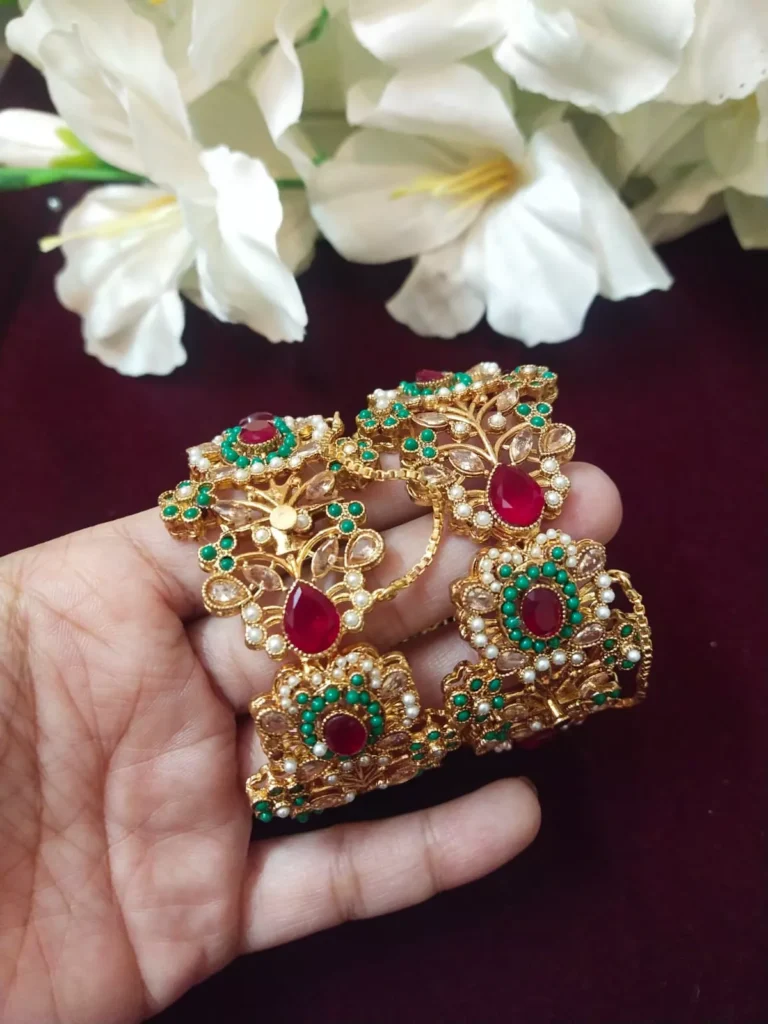
Since not everything labelled “Hyderabadi-style” online reflects genuine craftsmanship, here are practical, honest things to check:
1. Look Closely at the Stonework
Handset kundan or polki work often has a slightly raised, layered texture. This can indicate careful handwork, though it isn’t a guaranteed test of authenticity on its own — machine-finished pieces can also look neat and even.
2. Check for Meenakari Detailing
Many traditional kangans include enamel (meenakari) work on the reverse side. Its presence is a nice indicator of craftsmanship, though its absence doesn’t necessarily mean a piece is inauthentic — many contemporary designs skip it for simplicity or cost.
3. Consider Weight, But Don’t Over-Rely on It
Traditional kangans often feel substantial due to their base metal and stonework. That said, weight alone isn’t a reliable authenticity test — lighter pieces can still be well-made, and weight can also simply reflect design choice or metal type (gold-plated vs. gold, for instance).
4. Check Pearl and Stone Finishing
For pieces with pearls or polki-style stones, look for even colour, smooth surfaces, and clean, secure settings without visible glue or rough edges.
5. Buy From Sellers Who Are Transparent About Materials
Ask what materials are used — gold-plated brass, silver, or gold; real pearls or shell-based imitations; genuine stones or synthetic ones. A trustworthy seller will be upfront about this.
6. Sizing
Since kangans are often rigid, check the brand’s sizing chart carefully, or look for adjustable/openable designs if you’re unsure of wrist size or buying as a gift.
At Kisa Hyderabadi Zevar, we share clear details about materials and craftsmanship for each piece, so you can make an informed choice rather than a purely emotional one — even while enjoying the emotional side of the jewellery itself.
There’s something to be said for how differently a woman carries herself with a kangan on her wrist. For many, it’s less about the jewellery itself and more about what it represents — a connection to family, to celebration, to a moment worth marking.
Wearing a piece tied to one’s own cultural background can be genuinely grounding. It doesn’t need to “command respect” or make grand claims — sometimes, it’s simply a quiet, personal reminder of where you come from and what you value, worn comfortably in your everyday life or saved for the moments that matter most.
Jewellery like the Hyderabadi kangan often ends up meaning more over time than it does the day it’s bought — not because of any single dramatic story, but because it gets worn to weddings, tied to memories, and sometimes passed on to someone else in the family.
If you’re looking for a kangan to mark your own occasion — or simply to add a piece of Hyderabadi-inspired craftsmanship to your collection — Kisa Hyderabadi Zevar offers a range of designs with transparent details on materials and craftsmanship, so you can choose a piece you’ll genuinely love wearing.
Explore our Hyderabadi Kangan collection and find a piece that feels like yours.
1. What makes a Hyderabadi kangan different from a regular bangle?
It typically features kundan or polki-style stonework, meenakari detailing, and a bolder, more ornamental design, often associated with Hyderabad’s Laad Bazaar jewellery tradition — as opposed to simpler, plain bangles.
2. Can a Hyderabadi kangan be worn daily?
Lighter, simpler kangans with minimal stonework can be worn regularly, while heavier bridal-style pieces are usually better suited to special occasions.
3. Is a Hyderabadi kangan only meant for brides?
No. While it’s popular in bridal jewellery, kangans are worn by women of various ages for festivals, gifting occasions, and everyday styling.
4. How do I maintain and clean my Hyderabadi kangan?
Store it in a soft cloth pouch away from moisture, avoid contact with perfume or harsh chemicals, and clean gently with a dry, soft cloth to help preserve stonework and enamel detailing.
5. Is kundan-polki work unique to Hyderabad?
Not exclusively. Kundan and polki techniques are part of a broader Indian jewellery tradition linked historically to regions like Rajasthan and Mughal-era craftsmanship. Hyderabad has its own strong association with this style, particularly combined with its pearl trade heritage, but the technique itself isn’t unique to the city alone.
If you still have any querry feel free to reach out to us https://www.instagram.com/kisa.hyderabadizevar